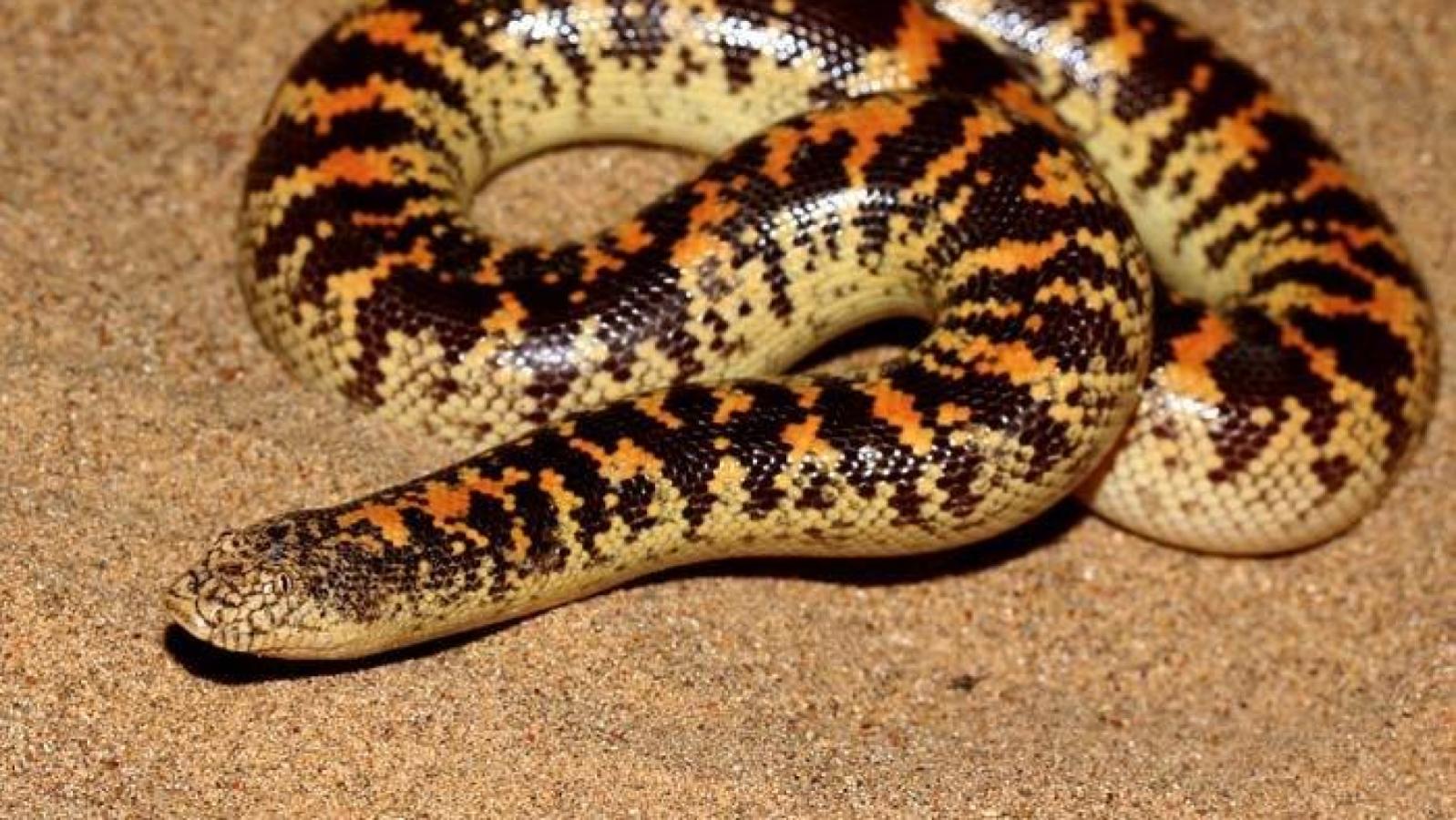
Eryx jayakari
Key traits and size details for Arabian Sand Boa.
Length
Weight
Lifespan
Sand boa native to the eastern Arabian Peninsula and adjacent southwestern Iran and Iraq; associated with sandy arid environments.
Native and introduced range details for Arabian Sand Boa.
Explore the highlighted native and introduced range for this species. Hover or tap a country to inspect it on the map.
Recorded in Saudi Arabia, Oman, Iran, Kuwait, United Arab Emirates, Iraq and Qatar.
No sourced temperature range yet.
No sourced humidity range yet.
Reference size-over-age data for Arabian Sand Boa.
Species reference size over age, built from curated catalog points rather than an individual reptile record.
Add at least two length or weight points to plot a species reference curve.
Housing, feeding, and handling guidance collected in one place.
This is a burrowing snake of loose sandy desert; provide a secure setup with suitable soft substrate for burrowing.
Field studies and observations record lizards, rodents and beetles as prey; a captive diet and feeding interval have not been verified for this species.
Wild prey includes lizards, rodents and beetles. Species-specific captive feeding guidance was not confirmed, so tailor captive care with an experienced reptile veterinarian.
Approved catalog and community photos for Arabian Sand Boa.
Catalog image
Browse approved catalog images and community-submitted reptile photos for Arabian Sand Boa. Community images retain contributor attribution in both the gallery and expanded view.
Create a free account to save these preferences across devices.
Units
Appearance